
In its original form, rice mostly consists of starch (beta starch), which is hard, poor-tasting, and hard to digest. To soften the hard starch, it needs to be converted to alpha starch by heating it with the right amount of water for a certain period of time. Here we look at how the process of cooking rice has changed through the history of rice culture.



Full-scale paddy rice cultivation is said to have started in Japan approximately 3,000 years ago. How did people in ancient times cook rice? Many unearthed pots have charred marks from carbonized rice, suggesting that rice was being cooked and eaten. Judging from the soot on the surface of the pots and the appearance of scorching, as well as traces of charred rice (carbonized rice) on the interior, it appears that rice was cooked in a manner similar to the “yutori method” or the modern “takiboshi method.”

-
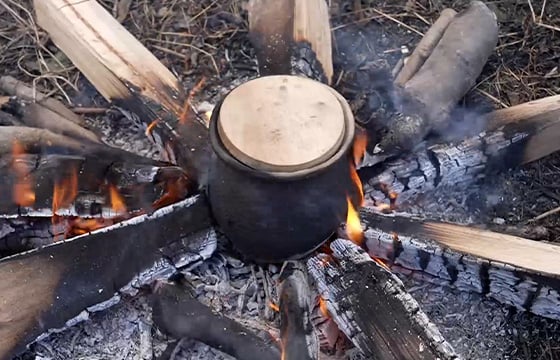
Put rice and water in a pot and heat it. -
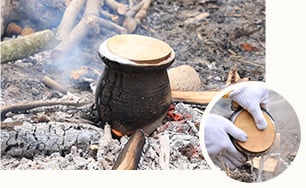
Drain the hot water when it boils over. -
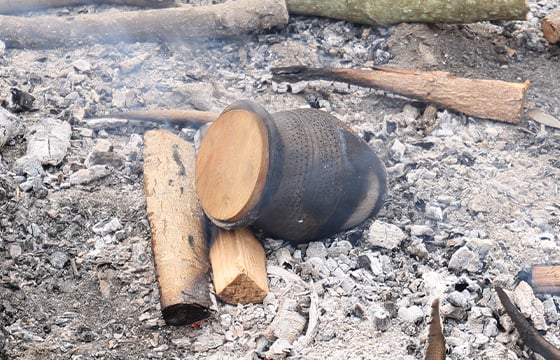
Steam the rice while turning over and changing the contact area on an open fire.
Photograph courtesy of Yusuke Senoo, LAKE BIWA MUSEUM, Shiga Prefecture

By around the 3rd century, pottery regarded as prototypes of steamers (koshiki) began to appear. This suggests that the practice of steaming was already used alongside boiling. However, given the low frequency and small size of these vessels, they are thought to have been used mainly for ritual purposes rather than daily cooking. By the 6th century, with the widespread combination of kamado stoves, long-bodied pots, and koshiki, steaming is believed to have become the primary cooking method. In the Nara Period, when he was stationed in Chikuzen as the head of the local government (around 731), Yamanoue no Okura wrote a poem called Hinkyu-mondoka, in when he mentions koshiki. This tell us that koshiki were part of the lives of the poor people at that time. It may have been common for people to steam rice during this period.



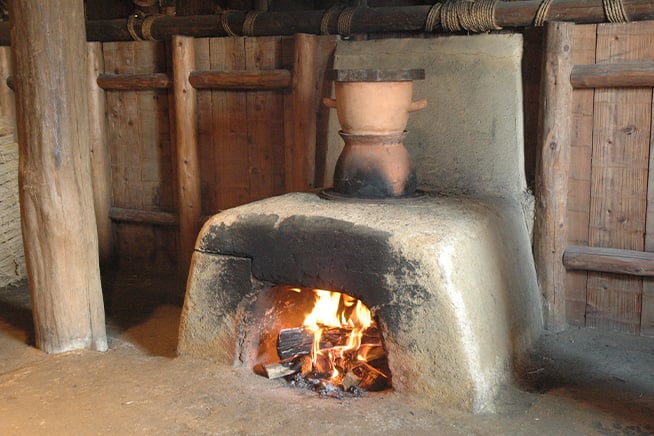
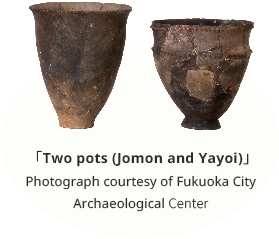
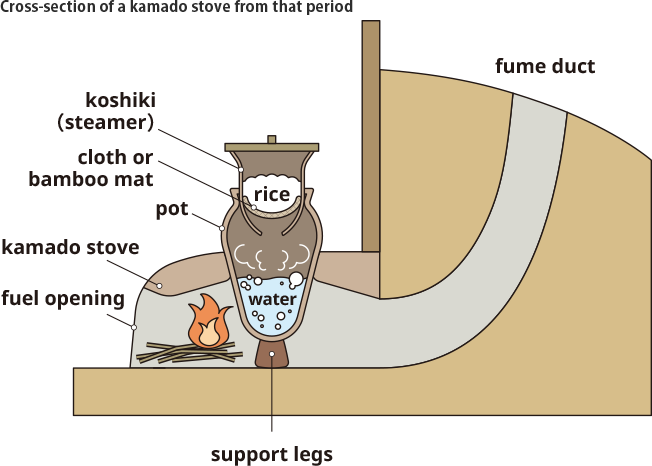

One reason for this shift may be changes in non-glutinous rice varieties: alongside low-stickiness rice suitable for boiling, stickier varieties became more common. Boiling different rice types together makes water adjustment difficult, whereas steaming accommodates varying stickiness with less risk of failure. (Varieties with higher stickiness lose their shape unless you use a little less water, whereas varieties with lower stickiness require a bit more water.)
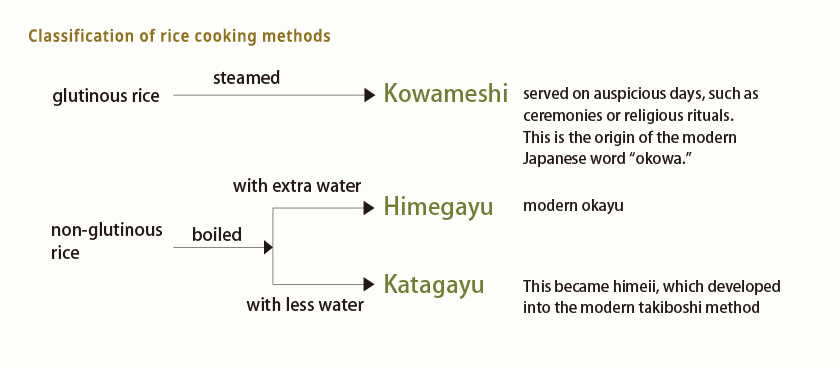
Around the Heian period, when the transition to stickier non-glutinous rice was complete, boiling using the takiboshi method, the precursor to modern rice cooking, spread. Until the medieval period, steamed rice was generally called ii and rice boiled with water was called kayu. In the mid-Heian period, soft rice called himeii, which is cooked by boiling highly polished rice, became available. By the mid-Heian period, soft rice known as himeii, which is cooked by boiling highly polished rice, also came to be eaten.
Cooking methods for rice began with the ancient methods of boiling (yutori/takiboshi), and there is evidence that steaming became popular after the Kofun period. In the Heian period, the boiling method (takiboshi) became popular again. Throughout all eras, the two cooking methods—boiling and steaming—coexisted, and it is thought that they were selected according to rice variety, purpose, and context. This general practice has been passed down to the present day.
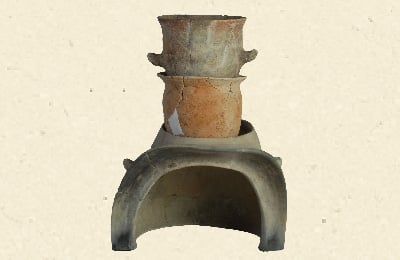
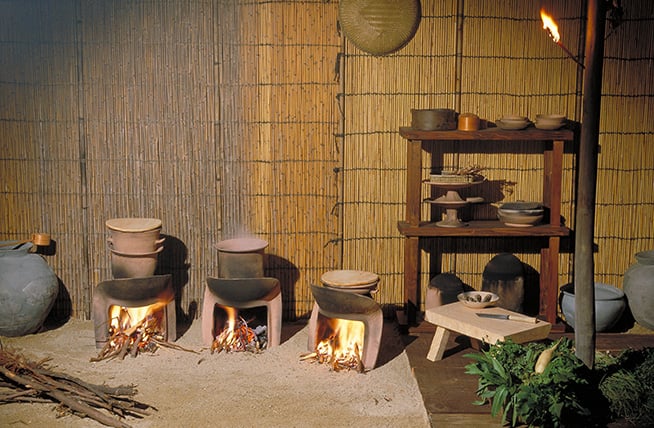


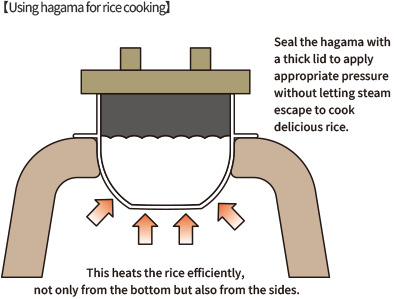
Around the end of the Heian period, earthenware pottery with a brim appeared, and from the Kamakura period onwards, iron hagama, which conduct heat better than earthenware and are harder to break, start to appear. Fitting the hagama into the kamado stove meant that the pot itself could be heated efficiently, not only from the bottom but also from the sides. When rice is cooked in a hagama, it is cooked with a small volume of water using the takiboshi method and then steamed in the pot.
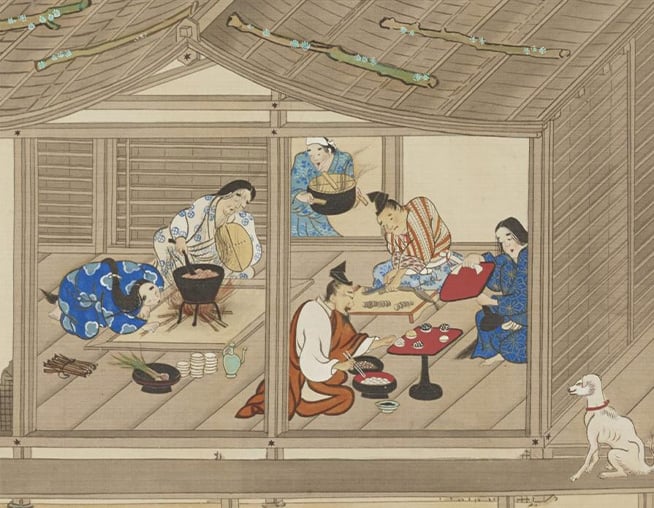
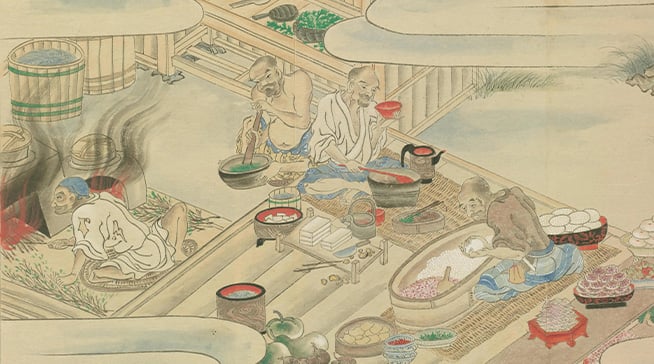
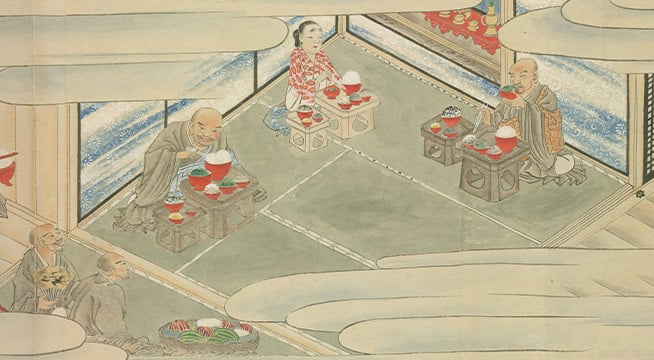
The portable kara kamado stoves, which had been used for religious rituals until then, developed from its original role into various portable cookware, including okikamado cooking stoves, shichirin charcoal grills, and furo braziers used for tea ceremonies. Bottom:Rice is piled high and eaten. The Ruiju Zoyosho, a book written in the late Heian period, explains that when presenting food on auspicious days a single ingredient should be piled up high.

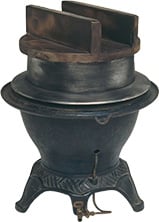
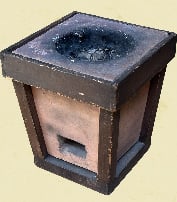
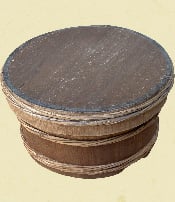
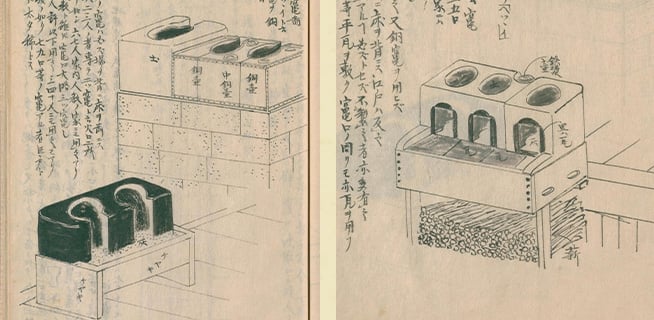
In the Edo Period, the traditional method of cooking rice, the takiboshi method, became firmly established. This happened at the same time as the popularization of earthenware stoves installed in homes as places to cook, as well as hagama as a type of cookware. In the late Edo period, pots with thick lids, which had not been seen before, became popular. The lid was thick and heavy to keep the steam sealed inside the pot, and the grip on the lid, which resembles the stands of Japanese wooden clogs, was designed to prevent the board from warping in high temperatures and humidity.
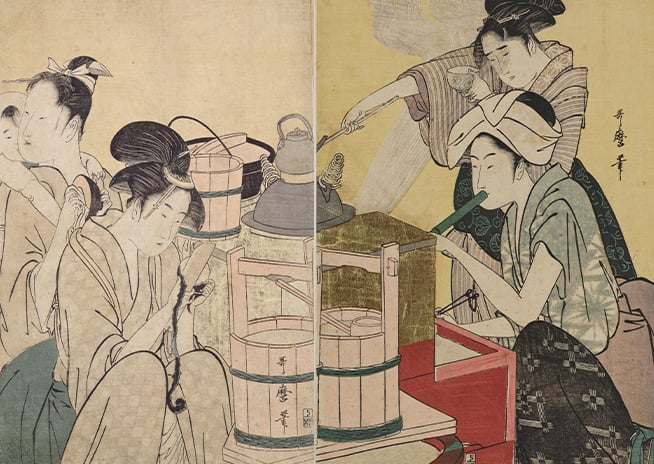
Source:ColBase(https://colbase.nich.go.jp/)
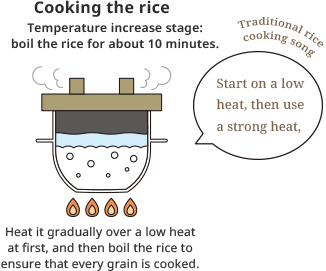
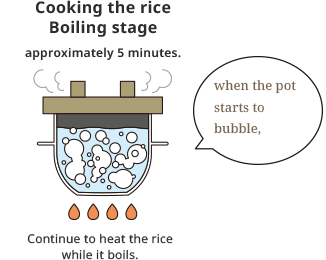
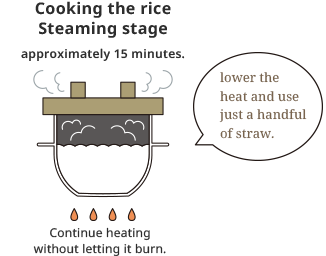
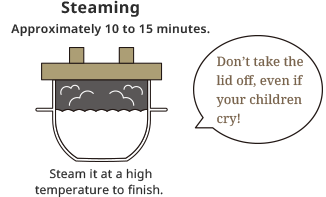
There is a traditional song in Japan said to have originated around this time that explains how to cook delicious rice (“Start on a low heat, then use a strong heat, when the pot starts to bubble, lower the heat and use just a handful of straw. Don’t take the lid off, even if your children cry!”). The automatic rice cookers we use every day apply the same logic. At that time, people were already giving a great deal of thought to how to cook delicious rice.

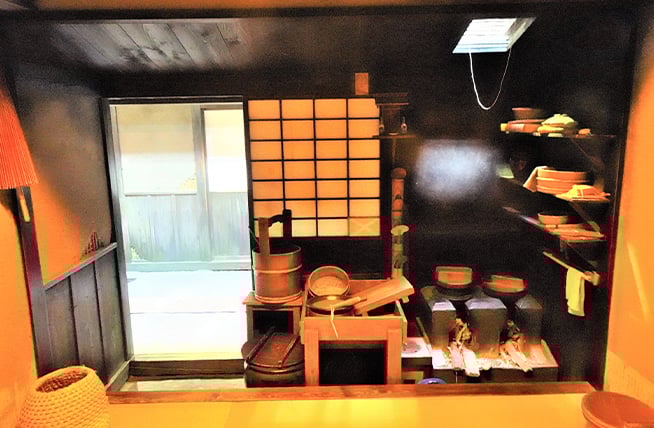
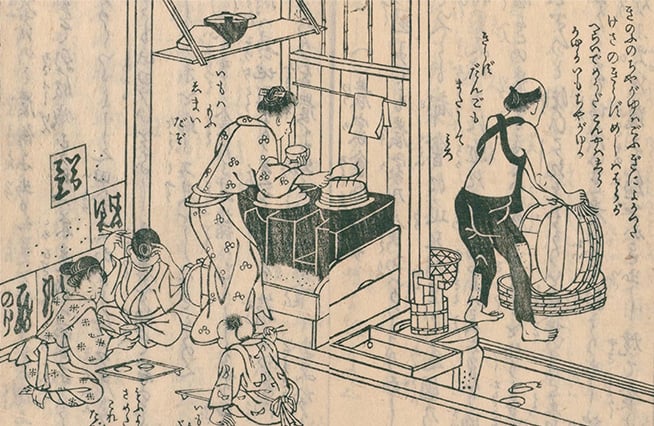

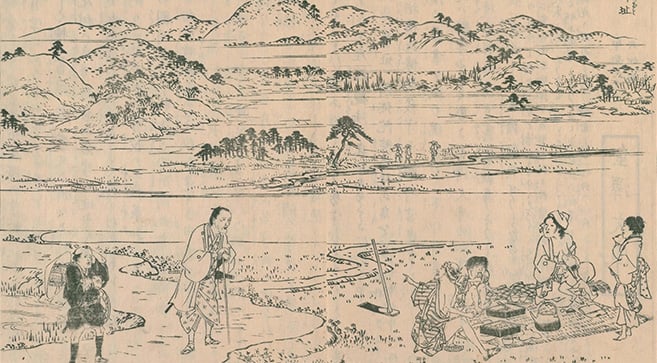
At that time, rice was generally cooked once a day.In Edo, people cooked rice in the morning and ate cold rice at midday and at night, while in Kamigata (Kyoto and Osaka), people cooked rice at midday and ate it as porridge the next morning.
Farmers and craftsmen who worked away from home cooked rice using the yutori method, which prevents rice from spoiling, and brought their own lunch boxes. Yutori method is a cooking method in which sticky hot water is discarded after boiling, so the rice does not become sticky or glossy. It becomes a little dry, but it does not go bad, even in summer. This was a blessing for farmers who worked outside all day.

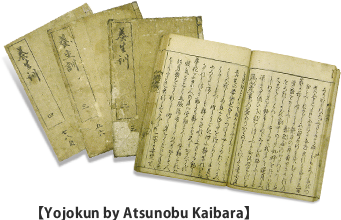
The Yojokun, a health guide published by Ekiken Kaibara of the Fukuoka domain in 1712, contains instructions on how to cook rice depending on your health.
“Takiboshi (cooking rice normally) is good for healthy people, whereas futatabi-ii (cooking rice again in hot water) is good for people who are feeling down because of stomach cramps. Yutorii(boiling rice with plenty of water) is good for people with a sensitive stomach. Sticky rice is not good for you because it will lower your mood.”(Yojokun Volume 3: Eating and Drinking, Part 1)

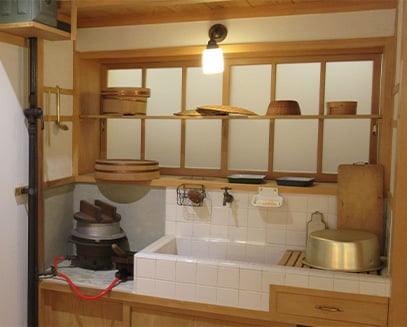
As gas and electricity became widespread during and after the Meiji period, Japan's first gas kamado stoves appeared in 1902, and rice cooking with gas became more popular, particularly in urban areas. In 1923, electric rice cookers started to be sold. In 1955, during Japan’s period of high economic growth, the automatic electric rice cooker appeared. In 1972, a rice cooker that could keep the rice warm was introduced, and in 1988, the IH rice cooker was first introduced. While electric rice cookers have become the mainstream, gas rice cookers are still used, mainly in the restaurant and prepared meals industries, including takeout lunch shops.
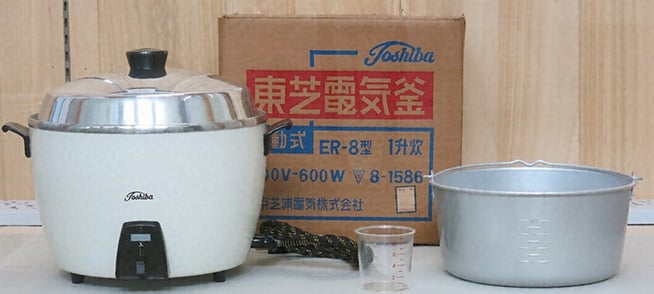
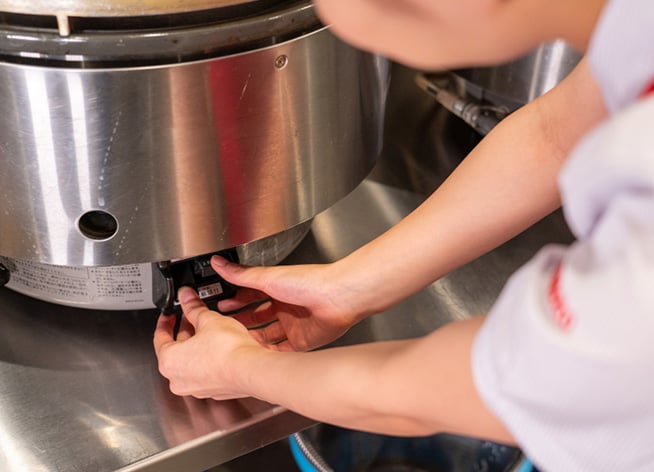
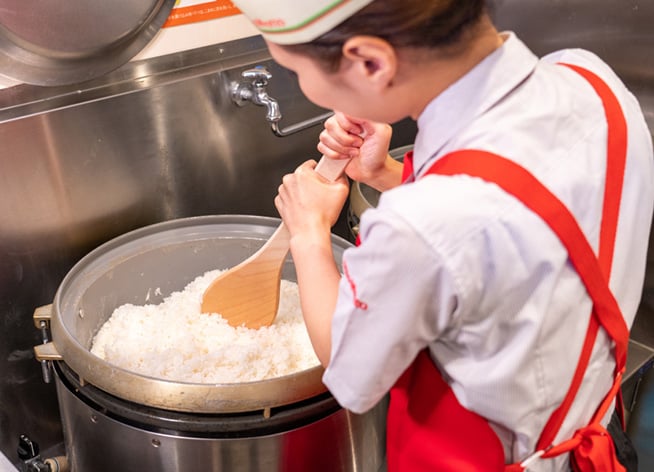
From the “Plenus Okome no Kodawari” pages on the Plenus websiteIt is said that the key to delicious rice is the convection that occurs in the pot, and a “crab hole-like” appearance in the cooked rice is proof of this. In a gas rice cooker that produces strong convection at a high temperature of 1,300°C, you can make delicious rice with grains that stand upright.

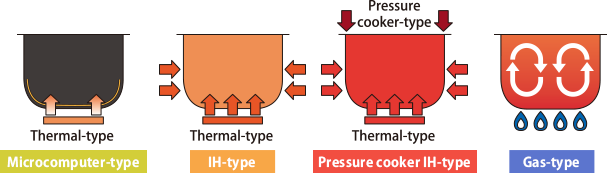
The pressure cooker IH-type rice cooker makes the rice more glutinous.
In contrast, there is also a culture of taking time and effort to enjoy cooking rice. Various styles of cooking rice have emerged, such as using a gas flame while checking the heat in an earthenware pot, or cooking rice in a camping pot. Some IH cookers have convenient functions like rice cooking mode. In the past, rice cooking itself required highly skilled cooking techniques, but we now live in an age where we can easily cook rice in a variety of ways.
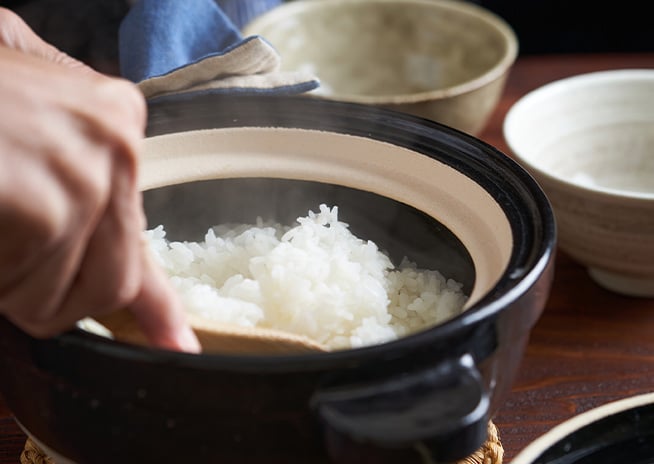
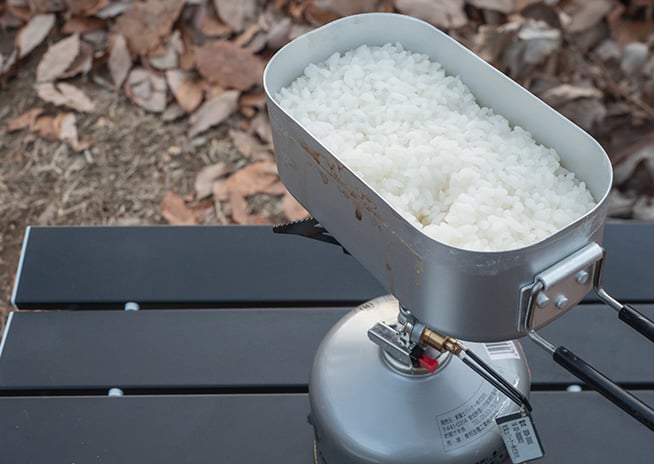

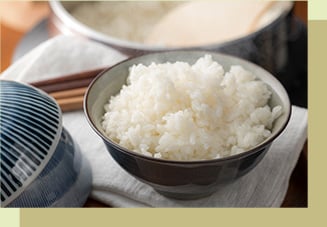
Cooking rice is a process in which raw rice starch (beta starch) is heated with an appropriate amount of water to break apart the molecular structure of the starch and gelatinize it (create alpha starch). When rice starch becomes “alpha starch,” it can be easily digested and absorbed.

-
1Measurement
It is important to accurately measure the amount of rice in a measuring cup (180 ml is approximately 150 g). Do not shake the cup, as this can result in overloading.
-
2Washing the rice
Nowadays, rice-polishing technology has advanced so much that it is no longer necessary to “thoroughly wash” the rice, but only to “clean” it. In the past, when there was dust, foreign matter, or remaining bran, it was necessary to thoroughly wash the rice. However, fire-dried rice crumbles easily, causing starch to flow out during cooking and affecting the overall taste. For old rice and quality-deteriorated rice, “thoroughly washing" the deteriorated outer part can be effective.
-
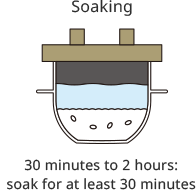
3Soaking
Rice grains are packed with starch through to the very center, and in order to make this starch into alpha starch, water must be absorbed in the center of the grain by soaking before cooking. It depends on the season and the water temperature, but it is advised to soak rice for 30 minutes to 2 hours. (The water absorption rate of the rice will not change even if it is soaked for more than 2 hours.) Water content of rice | Uncooked rice, 13-15% → Soaked rice, 20-25% → Cooked rice, approximately 62%
-
4Cooking the rice
(temperature increase stage)It is said that a good balance between water absorption of rice and gelatinization of starch is achieved by boiling for about 10 minutes.
-
5Cooking the rice
(boiling)The water in the pot is boiled vigorously, and the rice starch molecules are loosened. The gelatinization (alpha) of starch then occurs.
-
6Cooking the rice
(steaming)When the rice has absorbed most of the water, turn down the heat, use the steam in the pot to keep the temperature close to 100°C, and continue heating so as not to burn it. Taking into account the temperature reduction inside the pot, approximately 15 minutes is appropriate.
-
7Steaming
Leave the rice for 10 to 15 minutes after extinguishing the heat. The latent heat will then cook plump rice that is soft through to the center. The loosened starch adheres to the rice grain again, and the rice grain becomes moderately sticky and glossy.
-
8Loosening by mixing
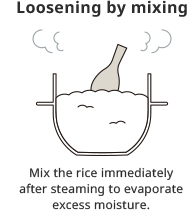
If the rice is left to steam for more than 15 minutes, the rice will cool in the pot and become watery due to the cooled water from the steam, so it is important to open the lid of the rice cooker immediately after steaming is finished and mix the rice with a rice paddle to evaporate the excess water.

Rice cultivation has been at the center of Japanese politics, economics, and culture from the very beginning. Rice was not just food, but something offered to the gods. It became money, a means of distribution, and capital. This system was officially completed under the Kokudaka system in the Edo period.
Rice was a highly liquid asset, and common people could only eat it at New Year's and Bon events, or on auspicious days, including ceremonial occasions. Normally, they would eat katemeshi, a mixture of barley, vegetables and potatoes. During the Edo period, rice was concentrated in urban areas, so Edo townspeople were able to eat rice relatively easily (according to one theory, they would eat 5-go of rice every day (approximately 750 g)).
From the Meiji period onwards, the rice supply could not keep up with the rapid population growth, and at times approximately 20% of domestic consumption was imported from Korea and Taiwan. It was in the mid-1960s that the supply of rice exceeded demand. In the 3,000-year history of rice cultivation, it is only recently that all Japanese have been able to eat as much rice as they want.